A model looks at your thing and names every company inside it. The vault sends you a fragment of each one that trades on Robinhood Chain. No app, no signature, no gas.
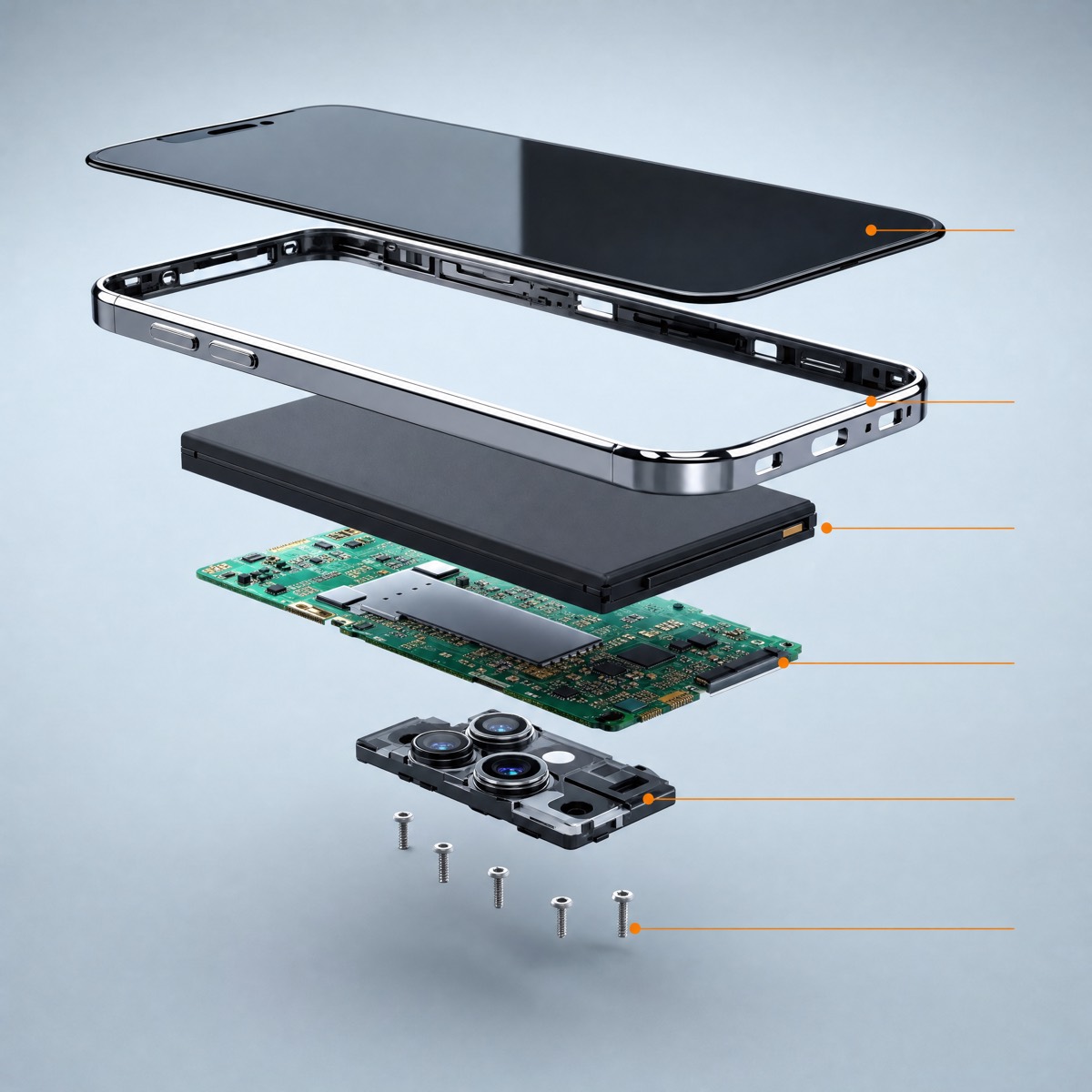
One product is never one company. Pick a thing below and the page splits what you paid across everyone who had a hand in it, using published teardown estimates. The companies this chain lists get a fragment. The ones it does not get named anyway, because that is the honest half of the answer.
| Ticker | What it is in this thing | Share of what you paid | Fragment |
|---|
Shares come from published teardown estimates and are rounded. The payout is policy v0: a fixed $1.00 per appraised object, split by each listed company's share of what you paid, minus the ones whose share lands under five cents. Nothing is deployed and nothing has been paid.
Prices: loading from the chain…
Your desk, your kitchen counter, the thing in your hand. One photo, taken on the page you are already on. No barcode to find, no packaging required, nothing to install.
A model names what it sees, says how sure it is, and writes the reasoning out loud. Then it does the part nobody bothers with: it names the suppliers inside the object and checks which of them this chain lists.
Give an address on Robinhood Chain and the fragments arrive there in one transaction, straight away. The vault pays the gas. You never sign anything, you never top up a wallet, and nothing sits waiting for you to come back and claim it.
Why some companies are named and not paid. Arithmetic, not policy. Measured on this chain on 3 September 2026: gas at 0.379 gwei, ETH at $2,509, so the first token in a payout costs $0.049 to move and every extra one in the same transaction costs $0.029. An appraisal pays $1.00. Sending you a seventeenth of a cent of Corning glass would cost sixty times what the glass is worth, so we do not send it. Anything whose share lands under five cents is named in the table, marked, and left out of the transaction. The table shows exactly which ones and what the vault spent on gas.
A photograph proves almost nothing, and that is priced in. You can point the camera at a screen showing someone else's kitchen. The model is told to refuse screenshots and stock photography, and it will still be fooled. What stops a farm is arithmetic, not cryptography: one object per address for life, a hard daily ceiling across everybody, and fragments worth cents. Faking it earns less than the electricity.
Every fragment that gets sent was bought first and is sitting in the vault before you photograph anything. Each balance is a balanceOf call made by your browser against a public RPC, not by our server. A ticker the vault cannot pay does not light up and never enters a payout.
Dashed means no token exists for that company anywhere on this chain. It is the honest shape of the problem: your life is full of companies nobody has tokenised.
A photograph is not proof. Anyone can shoot a screen, and no prompt will reliably catch it. The caps are the entire defence, and caps mean the reward has to stay small enough that nobody bothers gaming it.
The vault is a wallet we control. Version one has no contract: a server sees a valid appraisal and sends the transfer. That is custody, plainly. What you get instead of a promise is the address, the live balance and every payout as a public transaction you can count yourself.
Gas eats a real share of the reward, and the dust rule is how we keep it down. Between eight and twenty percent of every payout goes to the chain rather than to you. Push the reward lower and that fraction gets ugly; that is the real ceiling on how much a photograph can be worth, and it is why the smallest suppliers never make the transaction.
The model will be confidently wrong. It will call a knock-off the real thing and put the wrong supplier inside the right object. Every appraisal ships with its confidence and its reasoning visible, and anything below the threshold pays nothing rather than guessing on our behalf.
Most of your life is not on this chain. 193 stock tokens exist here. Sony, Samsung, Nestlé, Lego and the entire supermarket are missing, and several of the brands you care about are private companies no chain can list.
Not for US persons. Robinhood stock tokens are not available to them, and no amount of product design changes that.
Nobody may fund the vault but us. A brand paying to have its products appraised generously is the business model. Until one does, the vault is our own money and the model is unproven. The balance above is the only honest measure of whether that changed.
Nothing is deployed. Every mechanism here is policy v0. There is no contract on mainnet. Do not send funds to anything claiming to be it.